- (727) 591-5300
- support@nearnetlocal.com
- 7904 Willow Brook CT, Hudson FL 34667
While your competitors are burning cash on Facebook ads and praying for Google rankings, smart local service businesses are building real relationships through strategic event marketing. In 2025, when AI-generated content floods digital channels and consumers crave authentic connections, events represent your secret weapon for customer acquisition, community authority, and sustainable growth.
Here’s the reality most service business owners miss: events aren’t just networking opportunities or marketing expenses – they’re systematic revenue generators when executed strategically. A well-planned workshop can generate more qualified leads than months of digital advertising, while positioning you as the trusted local expert who solves real problems.
This isn’t about showing up to random chamber mixers with a pocket full of business cards. We’re talking about purposeful event strategies that transform prospects into customers, customers into advocates, and your business into the go-to authority in your service area.
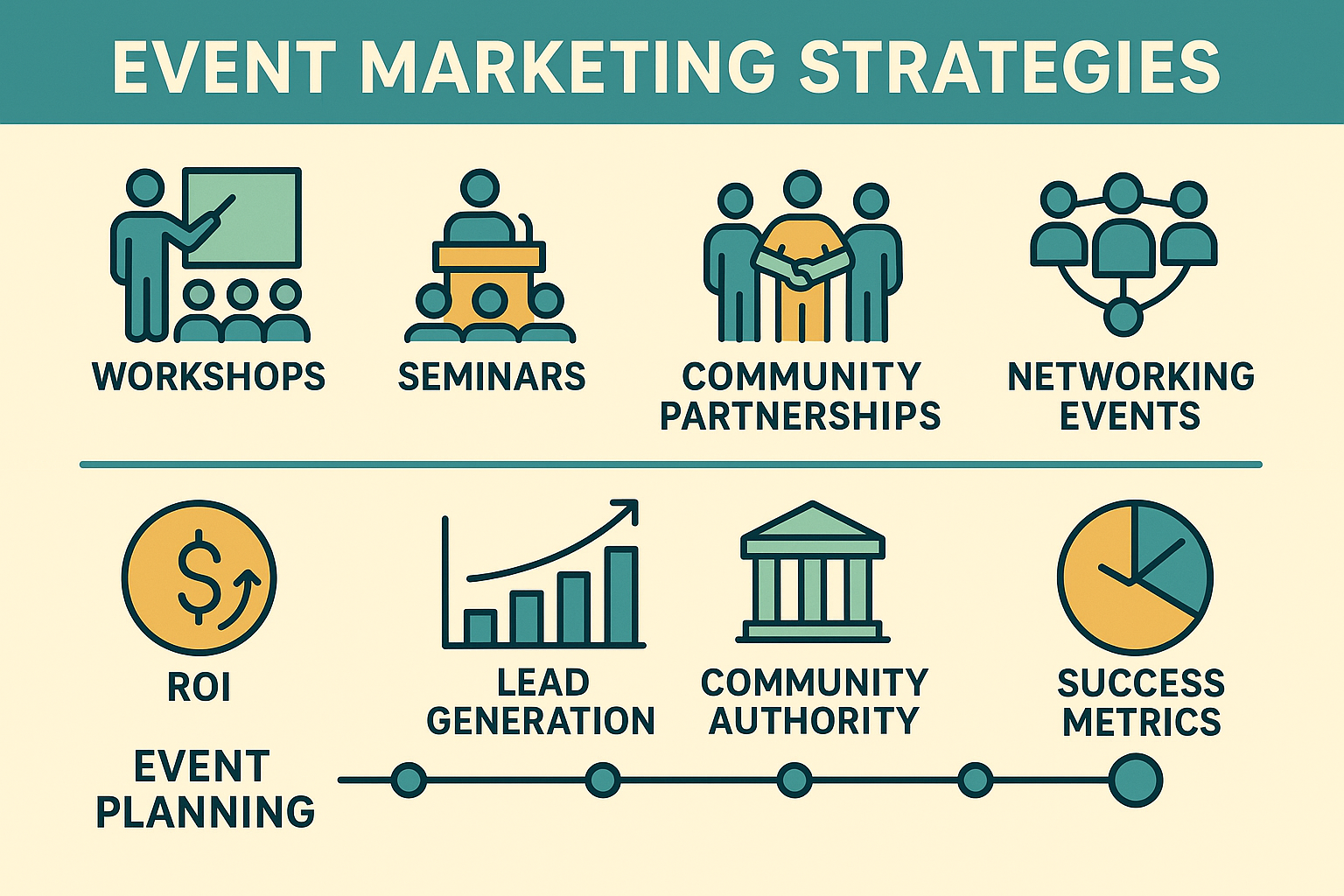
Not all events are created equal, and the type of event you choose should align with your customer acquisition goals, service offerings, and market position. Let’s break down the four strategic event categories that actually move the needle for local service businesses.
Educational events position you as the expert while providing immediate value to attendees. The key is addressing problems your prospects face before they become emergencies – this builds trust and keeps you top-of-mind when they need professional help.
HVAC Example: “Home Energy Efficiency Workshop” – Teach homeowners how to reduce energy bills through proper maintenance, air sealing, and system
Plumbing Example: “Prevent Costly Water Damage” seminar covering leak detection, pipe maintenance, and emergency response. Offer discounted whole- home plumbing inspections, identifying issues before they become expensive emergencies.
Landscaping Example: “Seasonal Garden Planning Workshop” teaching proper plant selection, soil preparation, and maintenance schedules. Generate leads for full landscape design services and ongoing maintenance contracts.
The educational event formula that works: 70% valuable content, 20% soft promotion of your services, 10% clear next steps for attendees who want professional help. This balance builds trust while generating qualified leads.
Partnering with established community organizations, schools, or nonprofits amplifies your reach while associating your business with trusted local institutions. These events build brand awareness and demonstrate community commitment – factors that significantly influence local purchasing decisions.
Auto Service Example: Partner with high schools for “Car Care 101” workshops teaching basic maintenance to new drivers. Parents appreciate the service, students learn valuable skills, and you build relationships with families who need reliable auto service.
Cleaning Service Example: Sponsor and provide services for local charity events, women’s shelters, or senior centers. The community goodwill translates into referrals and positive reputation that money can’t buy.
Community partnership events work because they remove the “sales” pressure while demonstrating your values and expertise. People buy from businesses they know, like, and trust – community involvement builds all three simultaneously.
Your existing customers are your most valuable marketing asset, but most service businesses treat them like transactions rather than relationships. Customer appreciation events strengthen loyalty, generate referrals, and create opportunities for service expansion.
HVAC Example: Annual “Customer Appreciation BBQ” with free system check- ups, priority scheduling for the busy season, and referral incentives. Current customers bring friends and neighbors, creating warm leads in a social setting.
Landscaping Example: “Spring Garden Party” for existing clients featuring garden tours, plant giveaways, and consultations for seasonal projects. Clients showcase your work to their neighbors while you identify expansion opportunities.
The appreciation event strategy: celebrate your customers while creating natural opportunities for them to advocate for your business. Word-of-mouth referrals from satisfied customers convert at rates that make digital advertising look expensive.
Strategic networking isn’t about collecting business cards – it’s about building relationships with complementary businesses, suppliers, and referral sources. The right industry connections can transform your business growth trajectory.
Focus on quality relationships with businesses that serve your same customers but don’t compete directly. Real estate agents, home inspectors, interior designers, and contractors can become consistent referral sources when you provide exceptional service and maintain regular contact.
Great events don’t happen by accident – they result from systematic planning, flawless execution, and strategic follow-up. Here’s the framework that turns event ideas into revenue-generating reality.
Start with clear objectives that go beyond “getting our name out there.” Define specific, measurable goals: number of qualified leads, conversion targets, customer lifetime value projections, and referral generation expectations.
Venue selection impacts attendance and perception. Choose locations that reinforce your professional image while being convenient for your target audience. Community centers, libraries, and partner business locations often work better than expensive hotel conference rooms for local service businesses.
Timing matters more than most businesses realize. Research local calendars, school schedules, seasonal factors, and industry cycles. HVAC businesses shouldn’t schedule events during peak heating or cooling seasons, while landscaping services should avoid gardening workshops during winter months in northern climates.
Registration and communication systems should capture contact information while setting proper expectations. Use simple online registration forms that collect phone numbers, email addresses, and specific service interests. This data becomes your follow-up foundation.
Professional presentation standards matter more for service businesses than product companies – you’re selling expertise and trustworthiness, not tangible goods. Invest in quality materials, clear signage, and polished presentations that reinforce your professional competence.
Interactive elements keep audiences engaged while demonstrating your expertise. Hands-on demonstrations, problem-solving exercises, and Q&A sessions create memorable experiences that differentiate your business from competitors who rely solely on advertising.
Staff preparation ensures consistent messaging and professional representation. Brief your team on event objectives, key talking points, and follow-up procedures. Every interaction should reinforce your brand values and service quality.
Lead capture systems should be seamless and non-intrusive. Use sign-in sheets, business card drawings, and follow-up surveys to collect contact information. Avoid aggressive sales tactics that damage the educational or community-focused atmosphere.
Event success is determined by post-event follow-up, not attendance numbers. Most businesses waste event investments by failing to systematically contact attendees within 48-72 hours when your presentation is still fresh in their minds.
Segmented follow-up strategies recognize that attendees have different needs and purchase timelines. Hot leads who expressed immediate interest require personal phone
calls, while educational attendees might need email nurture sequences that provide ongoing value until they’re ready to buy.
Value-added follow-up maintains relationships without being pushy. Send helpful resources, seasonal reminders, and exclusive offers that keep your business top-of-mind while providing genuine benefit to prospects.
Smart local service businesses use events as content creation opportunities that extend impact far beyond attendee numbers. Every workshop, seminar, or community event can generate months of digital marketing content while amplifying your local search presence.
Google Business Profile event posts boost local search visibility while demonstrating community involvement. Create event posts 2-3 weeks before events, including compelling descriptions, professional images, and clear attendance information.
Post-event updates with photos, attendance highlights, and upcoming event announcements maintain engagement while showing community activity. Google rewards businesses that regularly update their profiles with fresh, relevant content.
Event posts should include location-specific keywords and service-related terms that align with your SEO strategy. “Free HVAC maintenance workshop in [City Name]” helps with local search rankings while promoting your event.
Document events through photos, videos, and attendee testimonials that provide social proof of your expertise and community involvement. Behind-the-scenes content, expert tips shared during presentations, and success stories create authentic social media content.
Live streaming portions of educational events extends reach to prospects who couldn’t attend while positioning you as an accessible expert. Facebook Live, Instagram Live, and LinkedIn Live broadcasts can generate leads from viewers who want to learn more about your services.
User-generated content from attendees amplifies your message through trusted social networks. Encourage social sharing with branded hashtags, photo opportunities, and
shareable takeaways that attendees want to post about.
Event attendees represent highly qualified email subscribers who have demonstrated interest in your expertise. Develop email sequences that continue the educational value while nurturing prospects toward service purchases.
Exclusive event content, advanced tips, and special offers for attendees create a sense of VIP access that strengthens relationships and increases conversion rates. People who attend your events are more likely to hire your services when properly nurtured.
Dedicated event landing pages improve registration rates while providing SEO benefits through location-specific and service-related content. Include speaker bios, agenda highlights, and clear value propositions that encourage attendance.
Post-event content creation extends event value through blog posts, case studies, and resource pages that continue attracting organic search traffic. “Questions from Our Recent HVAC Workshop” blog posts can rank for local service keywords while demonstrating expertise.
Event marketing success isn’t measured by attendance numbers – it’s measured by customer acquisition, revenue generation, and long-term relationship building. Here’s how to track metrics that actually matter for your business profitability.
Lead quality matters more than lead quantity for local service businesses. Track attendee conversion rates, average project values, and customer lifetime values to determine event ROI. Ten qualified leads from a workshop often generate more revenue than 100 unqualified digital advertising clicks.
Referral generation from event attendees creates multiplier effects that compound over time. Track how many existing customers bring guests to appreciation events, and measure the conversion rates of those warm referrals.
Brand awareness and local market positioning improvements are harder to quantify but crucial for long-term growth. Monitor local search rankings, online review mentions, and organic website traffic increases following event campaigns.
Calculate true event costs including venue, materials, staff time, and promotional expenses. Divide total costs by qualified leads generated, then track conversion rates and average project values to determine cost per customer acquisition.
Compare event-generated customer acquisition costs to digital advertising, direct mail, and other marketing channels. Many local service businesses discover that events generate higher-quality leads at lower acquisition costs than digital alternatives.
Event-generated customers often have higher lifetime values than digital advertising leads because they know, like, and trust your business before hiring you. Track retention rates, repeat business frequency, and referral generation from event-sourced customers.
Seasonal patterns in event effectiveness help optimize timing and resource allocation. HVAC businesses might find spring maintenance workshops generate higher conversion rates than summer events, while landscaping services might see better results from fall planning seminars.
Customer relationship management (CRM) systems that track lead sources ensure accurate attribution of event-generated business. Tag contacts based on event attendance and monitor their progression through your sales process.
Google Analytics UTM parameters for event-related website traffic, social media tracking for event-generated engagement, and phone call tracking for event-referenced inquiries provide comprehensive measurement capabilities.
Professional event execution requires attention to legal, safety, and operational details that protect your business while reinforcing your competent, trustworthy reputation.
Liability insurance coverage should extend to event activities, particularly for hands-on demonstrations or customer appreciation events. Consult your insurance provider about event-specific coverage requirements and limitations.
Photography and video releases protect your ability to use event content for marketing purposes. Simple release forms signed during registration prevent legal complications while enabling content creation opportunities.
Prize and giveaway regulations vary by state and can create unexpected legal complications. Research local requirements for contests, drawings, and promotional offerings to ensure compliance.
Risk assessment for event activities, venue safety considerations, and emergency procedures demonstrate the same attention to detail that customers expect from your service work. Safety incidents at events can damage your professional reputation and legal standing.
Clear communication about event expectations, appropriate attire, and any physical requirements helps attendees prepare while limiting liability exposure.
Consistent branding across all event materials reinforces brand recognition and professional competence. Business cards, signage, presentation materials, and staff uniforms should reflect the same quality standards as your service work.
Time management and agenda adherence show respect for attendees’ time while demonstrating operational competence. Late starts, rushed presentations, and disorganized logistics undermine the professional image you’re trying to build.
Event marketing isn’t a magic bullet – it’s a systematic strategy that builds real relationships, demonstrates expertise, and generates qualified leads when executed professionally. While your competitors chase the latest digital marketing trends, you’ll be building the community authority and customer relationships that create sustainable competitive advantages.
The local service businesses thriving in 2025 understand that people still prefer working with companies they know, like, and trust. Events create those relationships faster and more effectively than any digital channel, while providing content and social proof that amplifies your marketing across all platforms.
Start with one strategic event type that aligns with your customer acquisition goals and service expertise. Perfect the planning, execution, and follow-up systems before expanding to additional event strategies. Consistency and quality beat frequency and quantity in event marketing success.
Location-Based Landing Page Optimization Here’s the brutal truth about local landing pages: most of them are conversion killers disguised as
© 2025 Nearnet Digital Solutions LLC All Rights Reserved.
Terms of Service | Privacy Policy | Trusted Partners