- (727) 591-5300
- support@nearnetlocal.com
- 7904 Willow Brook CT, Hudson FL 34667
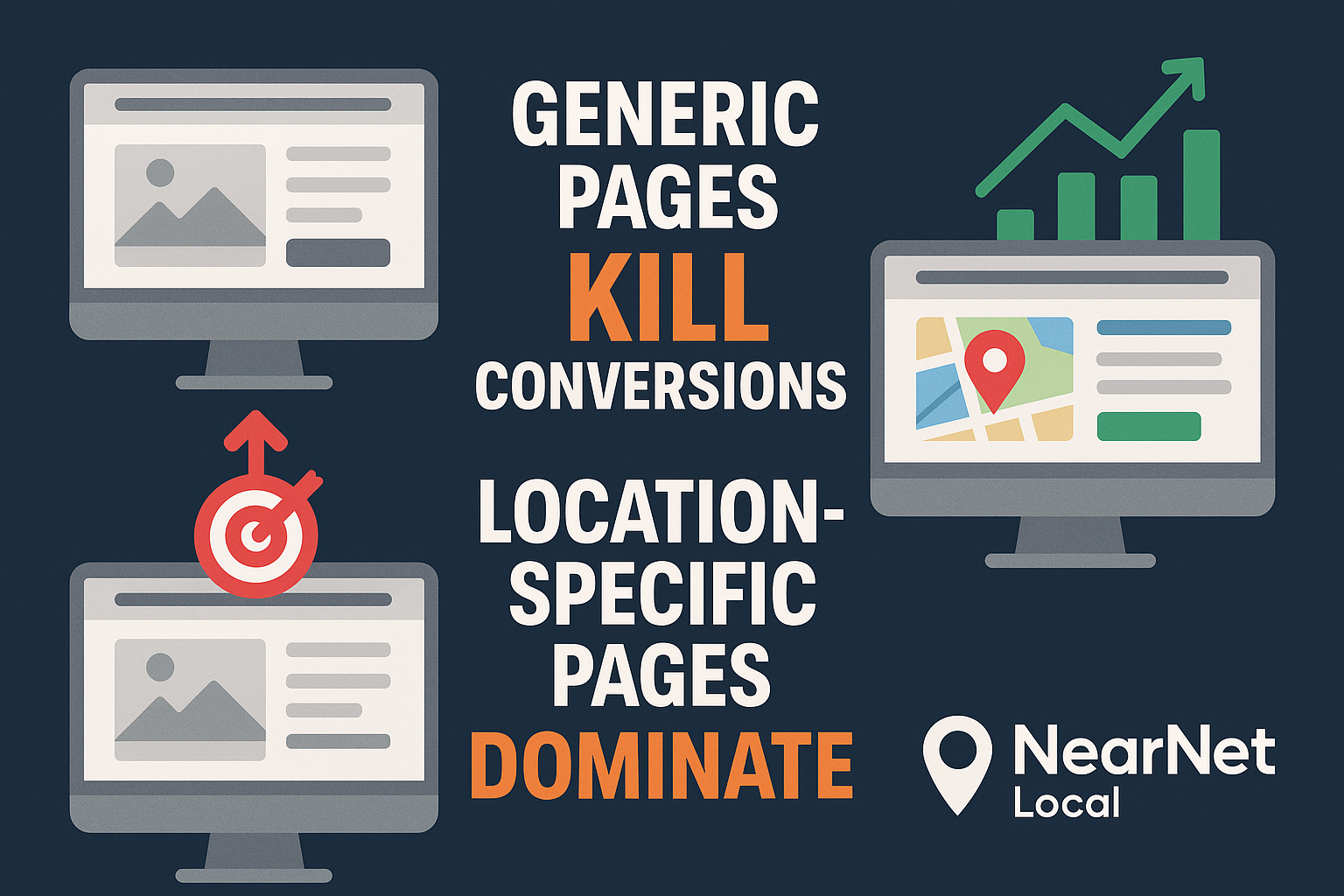
Here’s the brutal truth about local landing pages: most of them are conversion killers disguised as marketing assets. You’ve got plumbers in Phoenix with pages that look identical to contractors in Cleveland, HVAC companies stuffing “near me” keywords like they’re preparing Thanksgiving turkey, and landscapers wondering why their beautifully designed pages generate zero phone calls.
The problem isn’t just poor design or weak content—it’s strategic malpractice. Most local service businesses treat landing pages like digital business cards instead of what they actually are: sophisticated conversion machines that need to simultaneously satisfy Google’s ranking algorithm AND turn visitors into paying customers.
Smart local service owners understand this dual reality. They know that ranking #1 for “emergency plumber [city name]” means nothing if that traffic bounces faster than a bad check. They’ve figured out that strategic location-based optimization drives both search visibility AND revenue growth—because when you optimize correctly, ranking and conversion aren’t competing priorities, they’re complementary strategies.
This isn’t about creating more pages with your city name sprinkled throughout. It’s about building location-specific conversion systems that capture qualified local traffic and guide it toward profitable action. Let’s dive into how the pros actually do it.
Forget everything you think you know about local landing page structure. The “City + Service” formula that worked five years ago now performs about as well as a flip phone at a tech conference. Today’s location-based pages need sophisticated architecture that maps to actual customer behavior and search intent.
The foundation of high-converting local pages starts with understanding search intent progression. When someone searches “emergency plumber Phoenix,” they’re not just looking for any plumber—they need immediate help from someone who actually serves their specific area and can respond quickly.
Your page hierarchy should mirror this decision-making process:
Here’s where most businesses sabotage their own efforts: they either cast too wide a net (trying to rank for an entire metropolitan area with one page) or create so many hyper- local pages that they dilute their authority across dozens of low-traffic keywords.
The strategic approach focuses on geographic clustering based on actual service delivery logistics. If you’re an HVAC company, your Austin landing page shouldn’t just target “Austin”—it should strategically include surrounding areas where you actually provide same-day service: Cedar Park, Round Rock, Pflugerville, Georgetown.
Example Geographic Strategy: Instead of separate pages for every zip code, create location clusters: “Austin Metro HVAC Services” covering 78701-78799 zip codes with clear service area maps and response time commitments for each zone.
Local service searches fall into predictable intent categories, and your page architecture should acknowledge this reality:
Smart local pages address multiple intent types while maintaining clear conversion paths for each. Your emergency HVAC page should have prominent call buttons and 24/7 messaging, while your solar installation page can focus on consultation scheduling and educational content downloads.
Local searchers are mobile searchers—over 60% of local service searches happen on mobile devices, often during high-stress situations. Your mobile experience needs to anticipate this reality:
Schema markup for local pages isn’t optional—it’s the difference between Google understanding your page as a generic service listing versus recognizing it as a legitimate local business resource. Implementation should include:
Content that converts local visitors requires a fundamentally different approach than traditional SEO writing. You’re not just trying to rank for keywords—you’re establishing local authority, addressing market-specific concerns, and building trust with people who will invite you into their homes or businesses.
The days of cramming “plumber Phoenix AZ” into every paragraph are long gone. Modern local keyword optimization focuses on natural language patterns and contextual relevance. Instead of keyword stuffing, strategic integration looks like this:
The key is writing for humans first, then optimizing for search engines. Google’s algorithm is sophisticated enough to understand semantic relationships and local context—keyword stuffing actually hurts your rankings more than it helps.
Local service customers don’t just buy services—they buy trust, expertise, and community connection. Your content should demonstrate deep local knowledge and community involvement:
Authority Content Example: An Austin landscaping company writing about “Native Texas Plants That Thrive in Travis County Clay Soil” demonstrates local expertise that generic “best landscaping plants” content cannot match.
Effective local service messaging acknowledges that the same service can have completely different value propositions in different markets. Pool maintenance in Phoenix focuses on monsoon debris and excessive heat damage. Pool maintenance in Minneapolis emphasizes winterization and seasonal opening/closing services.
Your messaging should address:
Local social proof carries exponentially more weight than generic testimonials. “Great service!” from a satisfied customer means little. “Fixed our AC during the July heat wave—had us cool again in 2 hours!” from a local homeowner creates immediate credibility and relevance.
Optimize testimonials by including:
Local service CTAs need to acknowledge the decision-making reality of service purchases. Unlike e-commerce, local services often require consultation, estimates, or scheduling. Your CTAs should match the customer’s readiness level:
Technical optimization for local landing pages requires balancing search engine requirements with user experience realities. Local searchers are often in high-stress situations, using mobile devices, and need immediate information. Your technical implementation needs to support this urgency.
Page speed isn’t just a ranking factor for local pages—it’s a conversion killer. When someone’s basement is flooding and they’re searching for emergency plumbers on their phone, a 7-second load time means they’ll never see your contact information.
Critical speed optimization techniques:
Target load times under 3 seconds on mobile devices, with core content (contact information and service details) loading in under 1.5 seconds.
Schema markup for local pages goes beyond basic LocalBusiness implementation. Comprehensive structured data helps search engines understand your service area, pricing, availability, and relationship to customer needs:
Schema Implementation Example: A roofing company’s Dallas landing page should include LocalBusiness schema with “RoofingContractor” as the business type, service area covering Dallas-Fort Worth metroplex, and FAQ schema addressing common Texas roofing concerns like hail damage and wind resistance.
Internal linking for local pages should create logical connections between location- specific content and broader service information. Strategic linking patterns include:
Avoid over-optimization by focusing on user value rather than search engine manipulation. Links should help visitors find relevant information, not just pass page authority around your site.
Images on local landing pages serve dual purposes: supporting user experience and providing additional local SEO signals. Optimization should address both functions:
Local page analytics require tracking both traditional web metrics and location-specific conversion indicators:
Scaling location-based landing pages presents unique challenges that separate successful multi-location businesses from those drowning in duplicate content penalties and resource allocation nightmares. The key is building systematic processes that maintain quality while enabling efficient expansion.
Effective multi-location templates balance scalability with customization requirements. The framework should standardize technical elements while allowing for location- specific content and optimization:
The template approach allows for rapid page deployment while maintaining the customization necessary for effective local optimization.
Duplicate content penalties can devastate multi-location SEO strategies. The solution isn’t just changing city names throughout identical content—it requires genuine differentiation based on local market conditions:
Multi-location businesses must maintain NAP (Name, Address, Phone) consistency across all location pages and external citations. Inconsistencies confuse search engines and undermine local ranking potential:
Different markets require different competitive positioning strategies. Your Atlanta location might compete primarily on price and speed, while your Charleston location differentiates through historic property expertise and preservation experience.
Location-specific differentiation should consider:
Multi-location performance tracking requires systematic monitoring that identifies both overall trends and market-specific opportunities:
Success metrics should account for market differences—a newer location in a competitive market might show different performance patterns than an established location in a smaller market.
Location-based landing page optimization isn’t about gaming search algorithms or following outdated SEO formulas. It’s about building sophisticated conversion systems that serve real customer needs while establishing genuine local authority. The businesses winning in local search understand that ranking and revenue aren’t competing priorities—they’re complementary outcomes of strategic optimization that puts customer value first.
The framework outlined here scales from single-location service businesses to multi- market enterprises, but the core principle remains constant: successful local pages solve real problems for real people in specific geographic markets. When you get that foundation right, both search engines and customers respond positively.
Implementation requires systematic thinking, consistent execution, and ongoing optimization based on actual performance data. The investment in strategic location- based optimization pays dividends through improved search visibility, higher conversion rates, and sustainable competitive advantage in local markets.
Ready to Transform Your Local Landing Pages Into Revenue Generators?
Stop letting poorly optimized location pages drain your marketing budget and kill your conversion potential. Our local search experts help service businesses
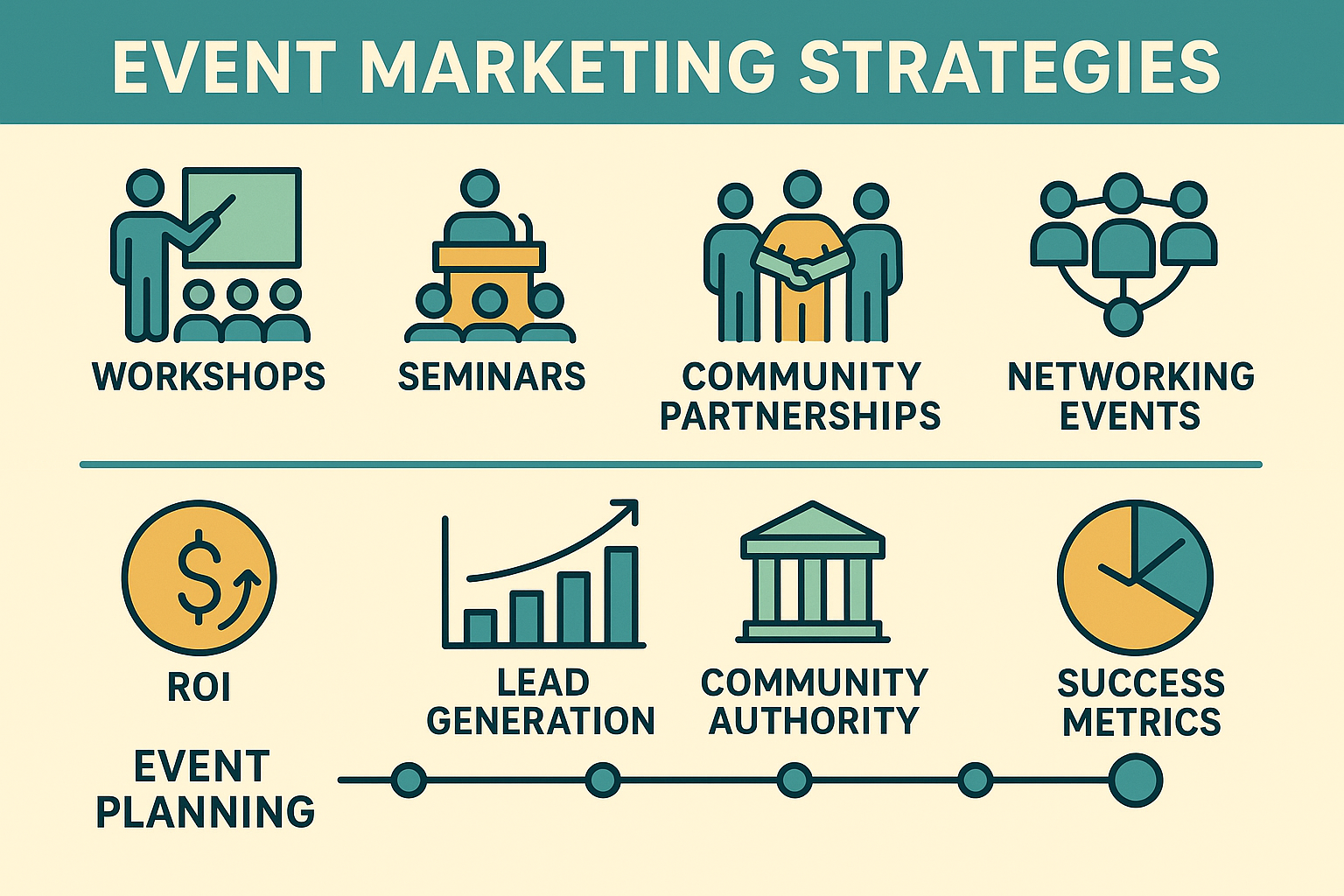
Event Marketing for Local Service Businesses While your competitors are burning cash on Facebook ads and praying for Google rankings,

© 2025 Nearnet Digital Solutions LLC All Rights Reserved.
Terms of Service | Privacy Policy | Trusted Partners