- (727) 591-5300
- support@nearnetlocal.com
- 7904 Willow Brook CT, Hudson FL 34667
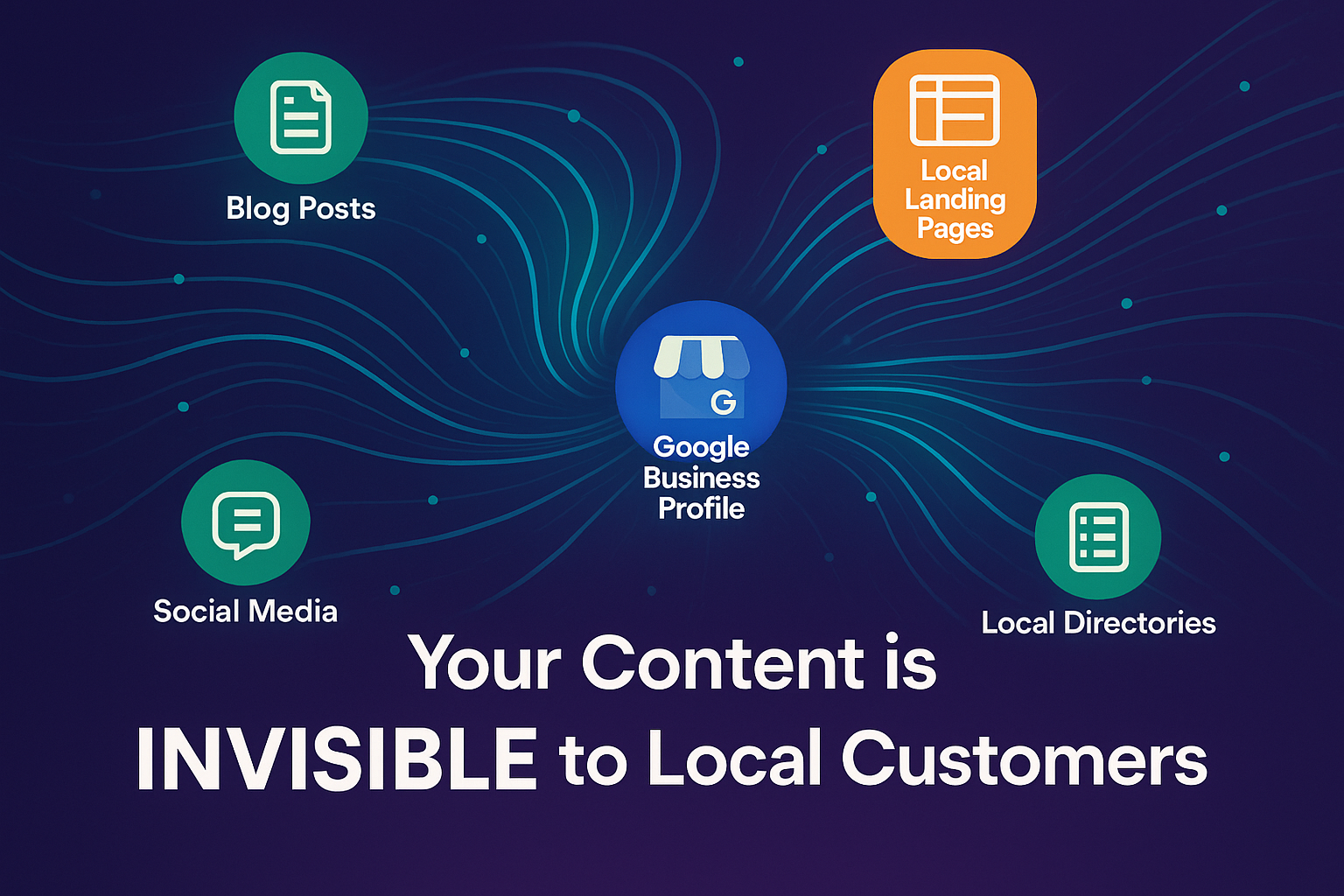
If you’re tired of watching your carefully crafted content disappear into Google’s abyss while your phone stays stubbornly silent, you’re in the right place. This isn’t another recycled guide about “creating valuable content.” This is your strategic playbook for building a local content marketing machine that dominates search results and drives real revenue.
The local service businesses winning in 2024 aren’t just creating content—they’re creating content ecosystems that capture every stage of the local buyer journey, from initial problem awareness to post-service follow-up. They understand that effective local content marketing requires a fundamentally different approach than national brands, and they’re leveraging that knowledge to claim digital real estate their competitors don’t even know exists.
Most service businesses approach local content like they’re throwing darts blindfolded
—lots of activity, minimal targeting, disappointing results. Building a solid foundation requires strategic thinking, not just more blog posts about seasonal maintenance.
Forget generic keyword tools that spit out the same tired suggestions everyone else is chasing. Effective local keyword research starts with understanding your customers’ language and intent at the hyperlocal level. Your potential customers aren’t searching for “HVAC services”—they’re searching for “furnace repair near me,” “emergency plumber Westchester County,” or “landscape design Fairfax VA.”
Start by analyzing your service calls from the past year. What problems were customers actually describing? How did they phrase their needs? A plumber in Arlington might discover that customers frequently search for “garbage disposal not working Arlington” rather than the more technical “waste disposal unit repair.” This customer language becomes your content gold mine.
Geographic content mapping is where most local businesses leave money on the table. You’re not just serving “the Phoenix area”—you’re serving Scottsdale, Tempe, Mesa, Chandler, and a dozen other communities, each with distinct characteristics, demographics, and search patterns.
Create content maps that align with your actual service areas and the unique characteristics of each location. A roofing contractor serving both coastal and inland areas needs different content strategies—coastal content focuses on salt air corrosion and hurricane preparedness, while inland content addresses extreme temperature fluctuations and UV damage.
Your geographic content strategy should include primary service areas (where you want most of your business), secondary service areas (profitable but not primary focus), and opportunity areas (emerging markets worth testing). Each geographic tier gets different content depth and frequency.
Service-area specific content goes beyond slapping city names into generic blog titles. It requires understanding the unique challenges, regulations, demographics, and competitive landscape of each area you serve.
A painting contractor in Northern Virginia needs different content for Arlington (urban condos, HOA requirements, historic district regulations) versus Loudoun County (large single-family homes, newer construction, different aesthetic preferences). The services might be identical, but the content addressing local concerns creates dramatically different conversion rates.
Develop content calendars that address seasonal patterns specific to each service area. Pool maintenance companies in Phoenix need different seasonal content than those in San Diego—both are warm climates, but the monsoon season creates unique challenges that become content opportunities.
Your competitors are inadvertently showing you exactly where market opportunities exist. Most local service businesses barely have content strategies, creating massive gaps for strategic players to exploit.
Analyze the top 5-10 competitors in each service area. What topics are they covering? More importantly, what topics are they missing? Look for patterns in their content—are they all focusing on DIY prevention tips while ignoring emergency service content? Are they covering residential but ignoring commercial opportunities?
The biggest opportunities often exist in the intersections—topics that combine service expertise with local knowledge that competitors can’t easily replicate. A local electrician who creates comprehensive content about updating electrical systems in 1970s-era homes (common in their service area) builds authority that national competitors can’t match.
Not all content is created equal in the local SEO ecosystem. The content types that drive rankings and conversions for service businesses require strategic alignment between search intent, local relevance, and conversion optimization.
Location-based landing pages are your digital storefronts for each service area, but most businesses treat them like afterthoughts—thin content with minor location variations that fool no one, especially Google’s algorithms.
Effective location pages combine deep local relevance with strong conversion elements. They should answer the question: “Why should someone in this specific area choose your services?” Include local landmarks, area-specific challenges, relevant local regulations, and community connections that demonstrate genuine local expertise.
A successful location page for an HVAC contractor in Plano, Texas, might discuss the specific challenges of cooling homes built during the city’s rapid 1990s expansion,
reference local utility rebate programs, mention experience with Plano’s building permit requirements, and include testimonials from recognizable neighborhoods.
Service-specific content should align with how customers actually think about and search for your services. Most businesses organize content around their internal service categories rather than customer problem categories, missing significant conversion opportunities.
Instead of creating generic “Plumbing Services” content, develop targeted pages around specific customer scenarios: “Kitchen Sink Won’t Drain,” “Water Heater Making Strange Noises,” “Toilet Keeps Running.” Each piece of content should address the specific problem, explain when professional help is needed, and provide clear next steps.
Layer in local elements by addressing area-specific considerations. A plumber in an older city might create content about “Cast Iron Pipe Replacement in Pre-1960 Homes,” while a plumber in a newer development area focuses on “Builder-Grade Fixture Upgrades for New Homeowners.”
Voice search is reshaping how customers find local services, with queries becoming more conversational and question-based. Local FAQ strategies position your content to capture these voice searches while building authority around common customer concerns.
Develop FAQs that mirror natural speech patterns and local dialects. People don’t voice search for “residential electrical installation”—they ask “Who can install a ceiling fan in my house?” or “How much does it cost to upgrade electrical in an older home around here?”
Structure FAQ content to capture the full customer journey, from initial problem identification through service selection and follow-up. Include questions about pricing,
timeline, what to expect during service, and how to prepare for technician visits. This comprehensive approach captures more search queries and builds customer confidence.
Community-focused content establishes your business as a local authority beyond just service provision. This content builds the trust and local connection that converts browsers into customers and customers into advocates.
Create content that demonstrates genuine community investment: local event sponsorships, community problem-solving, educational workshops, partnerships with other local businesses. A landscaping company might create content about native plant gardens that support local wildlife, or partner with local schools on environmental education projects.
The key is authenticity—community content should reflect genuine involvement, not marketing stunts. Customers can distinguish between businesses that are truly invested in the community versus those just trying to rank for local searches.
Creating great local content is only half the battle—strategic distribution and amplification determine whether that content actually reaches your target audience and drives business results. Most local service businesses create content and hope it finds its audience, while strategic businesses actively push content through multiple channels to maximize visibility and impact.
Cross-platform syndication for local services requires adapting content format and messaging for each platform while maintaining consistent local messaging. Your comprehensive blog post about “Preparing Your HVAC System for Summer” becomes social media tips, email newsletter content, Google Business Profile posts, and video content for YouTube.
Develop content templates that facilitate easy adaptation across platforms. A single comprehensive service guide can become multiple touchpoints: detailed blog post for SEO, infographic for social sharing, video walkthrough for YouTube, checklist for email capture, and quick tips for social media posts.
Focus syndication efforts on platforms where your local customers actually spend time. For most service businesses, this means Facebook for community engagement, Instagram for visual project showcases, YouTube for educational content, and email for direct customer communication.
Local media partnerships create content amplification opportunities that build authority while reaching audiences you can’t access through owned channels. Local newspapers, radio stations, community blogs, and neighborhood publications are often hungry for local expertise and seasonal content.
Position yourself as the go-to expert for seasonal advice, emergency preparedness, or local regulation changes. A roofing contractor might become the local media’s expert on storm damage assessment, while an electrician could be the authority on home safety inspections.
Develop relationships with complementary local businesses for content cross- promotion. A landscaper might partner with a local nursery for plant care content, while a plumber could collaborate with a home inspector for buyer education content. These partnerships expand reach while building local business community connections.
Local social media strategy focuses on community engagement and local visibility rather than viral reach. Your goal is to become a recognized local authority and stay top-of-mind for service needs within your geographic area.
Use location tags consistently and engage with local community groups, neighborhood pages, and local business associations. Share behind-the-scenes content that humanizes your business and showcases local projects (with customer permission). Before-and- after project photos with recognizable local landmarks or neighborhoods build credibility and local connection.
Develop content series that establish expertise: “Monday Maintenance Tips,” “Wednesday Project Spotlights,” or “Friday FAQ.” Consistent, valuable content builds audience expectation and engagement while supporting your position as a local authority.
Email marketing amplifies local SEO efforts by driving engagement signals and repeat traffic to your local content. Use email to promote new local content, share seasonal
tips, and maintain customer relationships that lead to reviews and referrals.
Segment email lists by service area and customer type for targeted local messaging. Customers in different geographic areas or with different service histories have different content preferences and needs. A quarterly maintenance email for commercial clients looks very different from seasonal preparation tips for residential customers.
Use email to drive traffic back to specific local landing pages and recent blog content. This creates engagement signals that support local SEO while providing additional value to customers. Include local event announcements, area-specific tips, and community involvement updates to strengthen local connections.
Measuring local content performance requires tracking metrics that actually correlate with business growth, not just vanity metrics that make reports look impressive. Local service businesses need measurement frameworks that connect content performance to lead generation, customer acquisition, and revenue growth.
Local content KPIs should focus on geographic performance, conversion rates, and customer acquisition costs rather than just traffic volume. Track which content drives phone calls, form submissions, and appointment bookings from specific service areas.
Monitor content performance by geographic area to identify which locations respond best to different content types. Your HVAC maintenance content might drive strong engagement in suburban areas with older homes but perform poorly in newer developments where maintenance needs are different.
Key metrics include: local organic traffic by service area, conversion rates by content type and location, average session duration on location-specific pages, and bounce rates for different geographic segments. These metrics reveal content effectiveness at the local level where your business actually operates.
Local search visibility tracking requires monitoring rankings for location-specific queries across all your service areas. Don’t just track generic terms—monitor the long- tail, location-specific queries that actually drive customer calls.
Track local pack rankings, organic rankings for local queries, and Google Business Profile visibility for service-related searches. Monitor how content publication affects rankings for target local keywords and which content types generate the strongest ranking improvements.
Use Google Search Console data to identify which local queries are driving impressions and clicks to your content. Look for opportunities where you’re getting impressions but low click-through rates—these indicate content optimization opportunities or topics that need more comprehensive coverage.
Attribution for local content requires tracking customer journeys that often include multiple touchpoints across online and offline channels. A customer might read your blog post, visit your location page, call for a quote, and book service—all conversion points need tracking for accurate performance measurement.
Implement call tracking for different content types and geographic areas to understand which content drives phone inquiries. Use unique phone numbers for different service areas or content campaigns to track attribution accurately.
Track assisted conversions where content plays a supporting role in customer decision- making. A customer might visit multiple pages before converting—understanding these content journeys helps optimize the entire conversion funnel rather than just individual pages.
ROI measurement for local content marketing requires connecting content performance to actual revenue generation. Track customer lifetime value by acquisition source to understand which content types attract the most valuable customers.
Calculate cost per acquisition for content marketing versus other marketing channels, factoring in content creation costs, distribution expenses, and time investment. Many service businesses discover that content marketing has higher upfront costs but lower long-term acquisition costs as content continues generating leads over time.
Monitor customer retention and referral rates from content-acquired customers. Customers who find you through educational content often have higher satisfaction rates and generate more referrals because they come with realistic expectations and appreciation for your expertise.
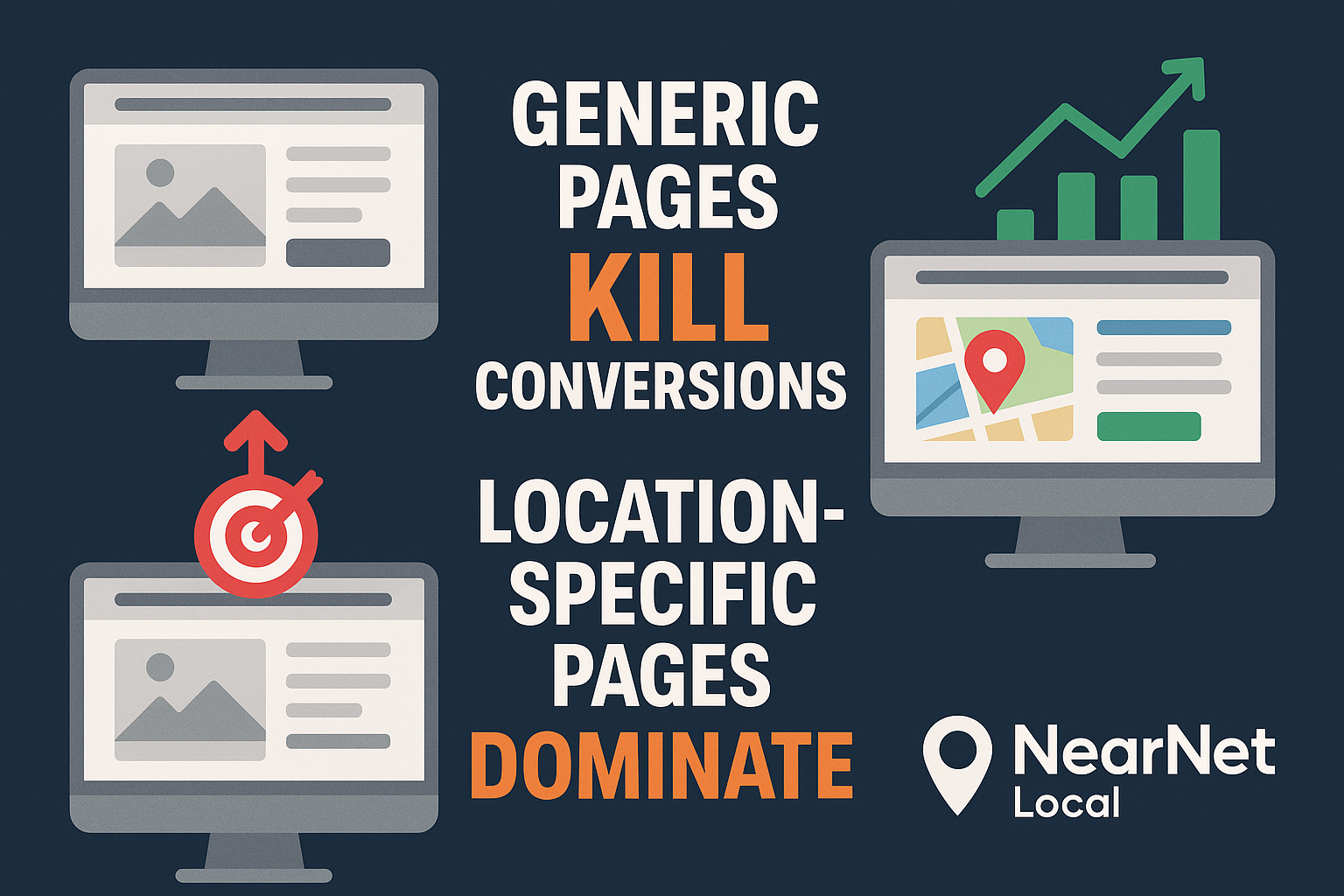
Location-Based Landing Page Optimization Here’s the brutal truth about local landing pages: most of them are conversion killers disguised as

© 2025 Nearnet Digital Solutions LLC All Rights Reserved.
Terms of Service | Privacy Policy | Trusted Partners